

“Then the king of Assyria brought people from Babylon, Cuthah, Ava, Hamath, and from Sepharvaim, and placed them in the cities of Samaria instead of the children of Israel; and they took possession of Samaria and dwelt in its cities.” (2nd Kings 17:24) The people of GOD were influenced and served false gods according to the rituals of the nations from among whom they were carried away. (2nd Kings 17:33) Although warned, they did not obey, but followed their former rituals. While they feared the LORD to a certain point, they, “…served carved images…” Likewise their children and their children’s children continued doing as their fathers did. (2nd Kings 17:40-41) These people became known as the Samaritans. When the Jews were rebuilding the temple in Ezra 4, the Samaritans wanted to help but were not allowed. They responded by discouraging the people of Judah in their effort to build. They hired counselors to frustrate the efforts of Judah all the days of Cyrus king of Persia, even until the reign of Darius king of Persia. From that point forward bitterness and rivalry existed between the Jews and Samaritans.
This sheds light on the question Jesus was asked in John 4:9.
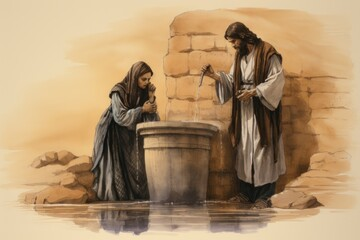
Being tired from His journey, Jesus stopped by Jacob’s well in a city of Samaria, called Sychar and spoke to a woman of Samaria, asking her for a drink of water. (John 4:7) Surprised,she asked,“…how is it that you being a Jew, ask a drink from me, a Samaritan woman. Jesus answered, “If you knew the gift of God, and who it is who says to you, ‘Give Me a drink,’ you would have asked Him, and He would have given you living water.” (John 4:9-10)
Most Jews would not dare speak to a Samaritan and often avoided Samaria by traveling along the Jordan River. Jesus though, took a route that led directly through the region of Samaria.Simply passing through was enough for Jesus to be questioned by foe and follower, but He went anyway. Jesus teaches us an important lesson, there is no place, race or reputation of people who are off limits when it comes to sharing the living water. Jesus did not allow the potential ridicule and persecution that may come His way to stop Him.
How far are we willing to go in order to teach the Gospel of Christ?
Do we sometimes walk along the banks of our own Jordan River to avoid our Samaria?
John 4:4 identifies the journey of Jesus as needful. As Christians there are journeys that will cause friends to question us and foes to mock us, nevertheless, thirsty souls need living water making the journey needful.
“Then the king of Assyria brought people from Babylon, Cuthah, Ava, Hamath, and from Sepharvaim, and placed them in the cities of Samaria instead of the children of Israel; and they took possession of Samaria and dwelt in its cities.” (2nd Kings 17:24) The people of GOD were influenced and served false gods according to the rituals of the nations from among whom they were carried away. (2nd Kings 17:33) Although warned, they did not obey, but followed their former rituals. While they feared the LORD to a certain point, they, “…served carved images…” Likewise their children and their children’s children continued doing as their fathers did. (2nd Kings 17:40-41) These people became known as the Samaritans. When the Jews were rebuilding the temple in Ezra 4, the Samaritans wanted to help but were not allowed. They responded by discouraging the people of Judah in their effort to build. They hired counselors to frustrate the efforts of Judah all the days of Cyrus king of Persia, even until the reign of Darius king of Persia. From that point forward bitterness and rivalry existed between the Jews and Samaritans.
This sheds light on the question Jesus was asked in John 4:9.
Being tired from His journey, Jesus stopped by Jacob’s well in a city of Samaria, called Sychar and spoke to a woman of Samaria, asking her for a drink of water. (John 4:7) Surprised,she asked,“…how is it that you being a Jew, ask a drink from me, a Samaritan woman. Jesus answered, “If you knew the gift of God, and who it is who says to you, ‘Give Me a drink,’ you would have asked Him, and He would have given you living water.” (John 4:9-10)
Most Jews would not dare speak to a Samaritan and often avoided Samaria by traveling along the Jordan River. Jesus though, took a route that led directly through the region of Samaria.Simply passing through was enough for Jesus to be questioned by foe and follower, but He went anyway. Jesus teaches us an important lesson, there is no place, race or reputation of people who are off limits when it comes to sharing the living water. Jesus did not allow the potential ridicule and persecution that may come His way to stop Him.
How far are we willing to go in order to teach the Gospel of Christ?
Do we sometimes walk along the banks of our own Jordan River to avoid our Samaria?
John 4:4 identifies the journey of Jesus as needful. As Christians there are journeys that will cause friends to question us and foes to mock us, nevertheless, thirsty souls need living water making the journey needful.
 Prospering Pathway
Leave a comment