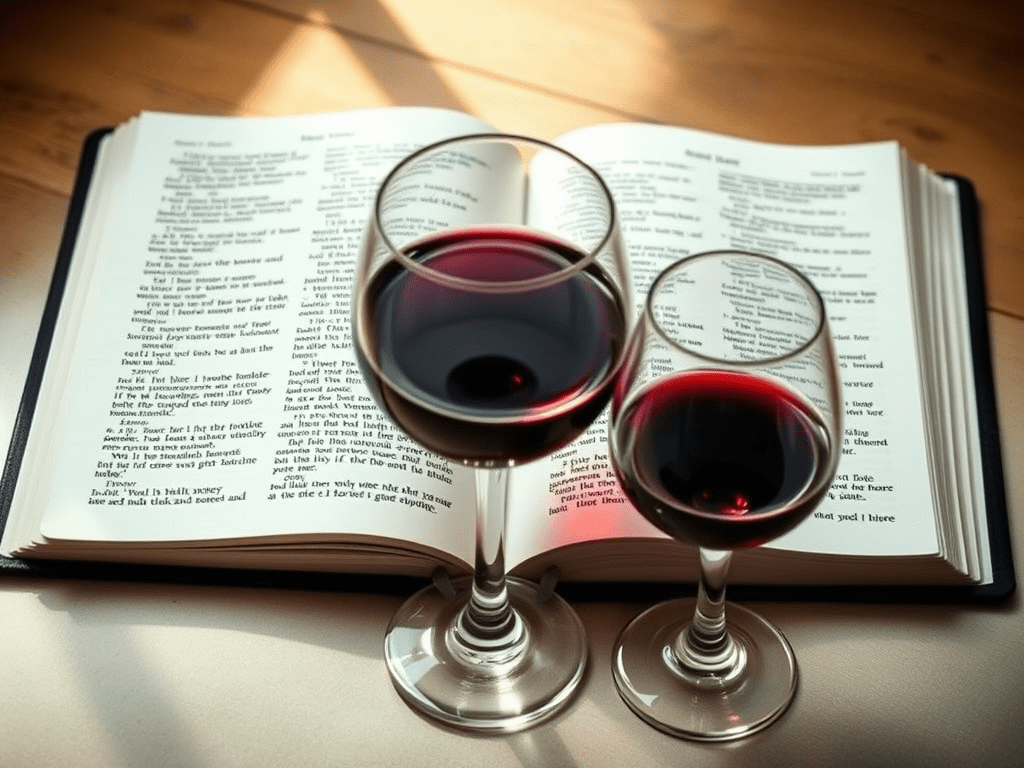
“Likewise, must the deacons be grave, not double-tongued, not given to much wine, not greedy of filthy lucre…” (1st Timothy 3:8)
“The aged women, likewise, that they be in behavior as becomes holiness, not false accusers, not given to much wine, teachers of good things…” (Titus 2:3)
Elders are instructed to “not be given to wine…” (1st Timothy 3:3) and deacons are instructed to “not be given to much wine…” (1st Timothy 3:8) therefore are we to conclude that elders must abstain from wine altogether however a deacon may partake in the drinking of wine just so long as he does not drink too much. This would likewise be the admonition to the aged women. May they drink wine too as long as they do not drink too much?
Another verse that is used in regard to this point is Ephesians 5:18 “…And be not drunk with wine, wherein is excess; but be filled with the Spirit.”
Peter also writes “For the time past of our life may suffice us to have wrought the will of the Gentiles, when we walked in lasciviousness, lusts, excess of wine, reveling, banqueting’s, and abominable idolatries…” (1st Peter 4:3)
Based on all of these passages may we drink as long as it is not too much or in excess?
Is this a reasonable argument?
“Be not over much wicked, neither be thou foolish: why shouldest thou die before thy time?” (Ecclesiastes 7:17) (ESV) Be not overly wicked, nor be a fool. Why should you die before your time?
Does this passage teach that we are permitted to partake in some wickedness just so long as we are not overly wicked?
In Ecclesiastes 7:16 Solomon writes, “Be not overly righteous, and do not make yourself too wise. Why should you destroy yourself?”
Does the LORD not want us to fully pursue true righteousness, but instead just take part in a little of it? Or that we should not strive to grow our wisdom to its fullest in godly matters, but rather settle for partial understanding and growth? Within the context, is Solomon not speaking of pursuing self-righteousness? Consider the Gnostics self-proclaimed righteousness and acts of asceticism in Colossians 2:21 “Touch not; taste not; handle not…” Paul writes “…these things have indeed a shew of wisdom in will worship, and humility, and neglecting of the body; but profit nothing in regard to the satisfying of the flesh.” Colossians 2:23
Or the self-righteousness of the Pharisee in Luke 18. “Lord, I thank thee that I am not like all of these other sinners…” False righteousness or manufactured righteousness….
The same applies to wisdom; in this context, could Solomon be referring to worldly wisdom? The main theme of Ecclesiastes is about the futility of chasing life under the sun. “Do not be overly wicked” does not mean it is acceptable to be moderately wicked or to indulge in a little wickedness. The warning is against being overtaken by wickedness. The one who does not indulge in a little wickedness will never be overtaken by it.
Regarding the argument in 1st Peter 4:3, where Peter condemns excess use of wine along with other behaviors, he clearly condemns drunkenness and becoming enslaved to wine. However, does this imply permission to use alcohol as long as it is not excessive? If so, in the very next verse, are we also to assume he permits rioting in moderation, as long as it is not excessive? 1st Peter 4:4 “Wherein they think it strange that ye run not with them to the same excess of riot, speaking evil of you…”
The Greek term “riot” here refers to an abandoned, wasteful, and dissolute way of living. Does the story of the prodigal son come to mind? Would it ever be acceptable to take part in the actions of the prodigal son from Luke 15, as long as it is not done excessively? Remember, Luke 15:13 mentions that he squandered his wealth on riotous living. Can such behavior be acceptable if done in moderation? If excess rioting in 1st Peter 4:4 does not allow for a moderately wasteful lifestyle, why would excess of wine in 1st Peter 4:3 imply moderate consumption of alcohol is acceptable?
The phrase “excess of wine” does not advocate for the moderate use of wine for social or recreational purposes, just as “excess of riot” does not justify moderate reckless living for similar reasons. Peter’s admonition is that as Christians, you should no longer live according to the flesh but instead live according to the will of God.
In their past life, they engaged in drunkenness, something they should no longer do. Another aspect mentioned in V4 is banqueting, translated from the Greek word “potos.” The ESV translates this as “drinking parties,” referring to a drinking bout or carousal—essentially a party, celebration, or spree. This explains why the ESV uses terms like “drinking party” or “drinking celebration.” A drinking bout is simply a setting where drinking occurs. Does everyone at a social gathering or in such settings get drunk? No, in most cases, people are not drinking excessively but are simply in an environment where drinking is possible. However, within the context of 1 Peter 4, Peter clearly speaks of this in a negative light. He associates drinking parties or banquets with the past life of a fleshly mind and identifies them as being contrary to the will of God.
Regarding the admonitions given to deacons and aged women, is Paul’s intent to encourage the moderate use of wine for recreational purposes? If so, should we then permit the moderate practice of adultery, fornication, or other forms of wickedness as long as it is not excessive? Is it acceptable to watch a small amount of pornography as long as it is not in excess? Or to use profanity moderately, provided it is not too much? The guidance to deacons and aged women is to avoid being enslaved to wine, but this does not imply that moderate consumption of wine for social purposes is acceptable. The one who does not moderately consume alcohol is in no danger of ever becoming enslaved to it.
 Prospering Pathway
Leave a comment